Innovations in Rice Cultivation
Strengthening Malaysia’s Rice Security
Key Industry Challenges
Low Productivity & Profitability: Farmers face unsatisfactory returns due to rising costs, price instability, and inconsistent yields.
Environmental & Irrigation Challenges: Heavy reliance on traditional irrigation and agrochemicals, combined with water management issues, pollution, pests, and flood risks, limits productivity and sustainability.
Limited Youth Participation: The lack of innovation and technological appeal reduces interest among younger generations in pursuing rice farming.
Market & Regulatory Constraints: Monopolistic structures, cartels, and bureaucratic hurdles restrict farmer independence and hinder investment growth.
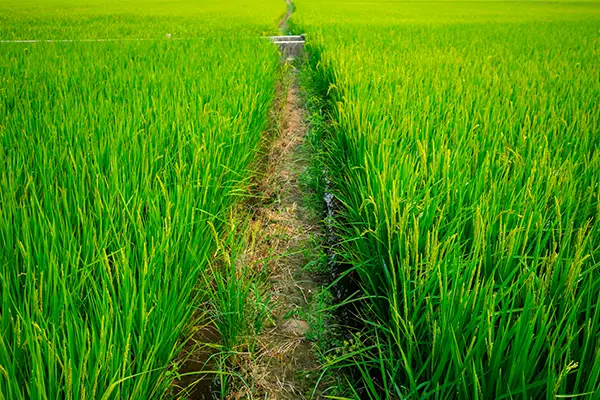
Wet Paddy Dry Planting Technology
Core Technology Applications
Sustainable Cultivation Practices reflect Hansal Agro’s commitment to responsible agriculture. By combining modern farming techniques with disciplined resource management, we ensure consistent productivity while preserving soil health and environmental balance for long-term agricultural sustainability.
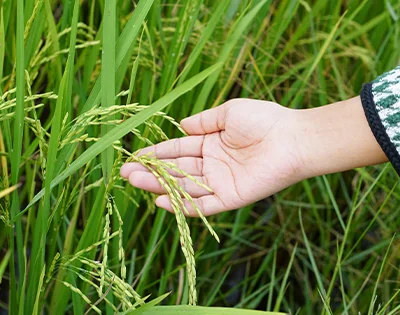
Smart Irrigation System
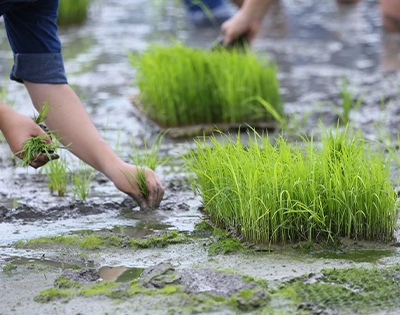
Biotechnology Seed Coating
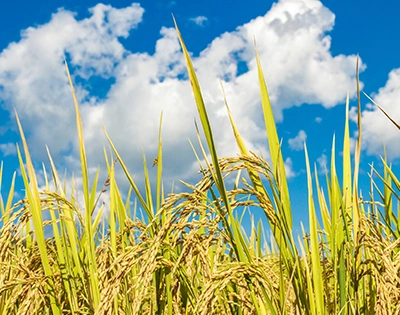
Precision Farming
Strengths & Opportunities
Direct Seeding
Drone-assisted sowing ensures uniform distribution, shorter planting cycles, reduced labor costs, and uninterrupted crop growth.
Water Efficiency
Plants store water during the first 50 days, with later needs supplied through spray fertilization and fertigation, significantly reducing water usage.
Regenerative Cultivation
One planting enables up to four harvests annually, cutting seed and nursery costs by up to 70%.
High Productivity (TRIPP Method)
Achieves up to 10 harvests in three years (≈3.3 seasons per year) with minimum yields of 10 tons/ha/season.
Projected Yield Smart SBB TRIPP
Projected Paddy Output
Benefits of Cutting-Edge Techniques: Increased Yield
Cost Efficiency
Sustainability
Climate Resilience
Empowering Communities & Protecting Nature
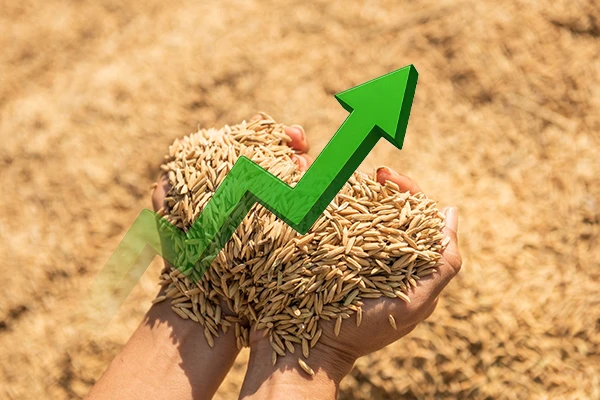
Economic Benefits
- Strengthened national food security
- Non-seasonal and continuous income generation
- Increased household income and purchasing power
- High productivity per unit of natural resources
- Attractive and scalable returns for investors
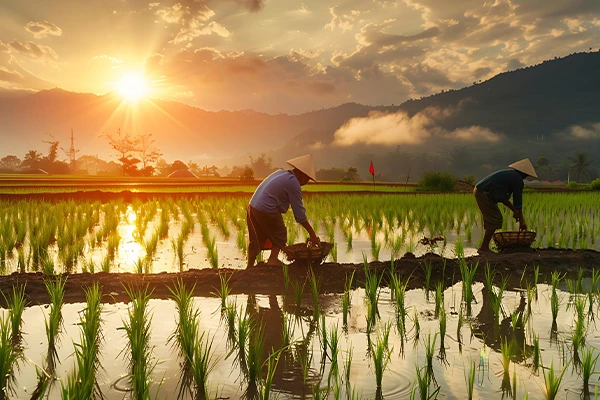
Social & Environmental Benefits
- Community self-sufficiency in rice, vegetables, fish, poultry, and fruits
- Rehabilitation of soil fertility through regenerative practices
- Pollution-free and low greenhouse gas (GHG) environment
- Modern technology that attracts and engages younger generations
- Local business and employment opportunities, reducing rural-to-urban migration