
Challenges
Risk Management & Industry Trends
Modern cattle farming is a complex balancing act, as producers must navigate the constant threat of infectious diseases like Foot and Mouth Disease (FMD) through rigorous biosecurity while simultaneously addressing the environmental pressures of methane reduction and manure management. These operational hurdles are compounded by economic volatility, where fluctuating costs for feed and fuel can thin profit margins overnight, and the escalating effects of climate change, which force farmers to invest in expensive cooling infrastructure to protect their herds from life-threatening heat stress.

Cattle Disease Outbreaks
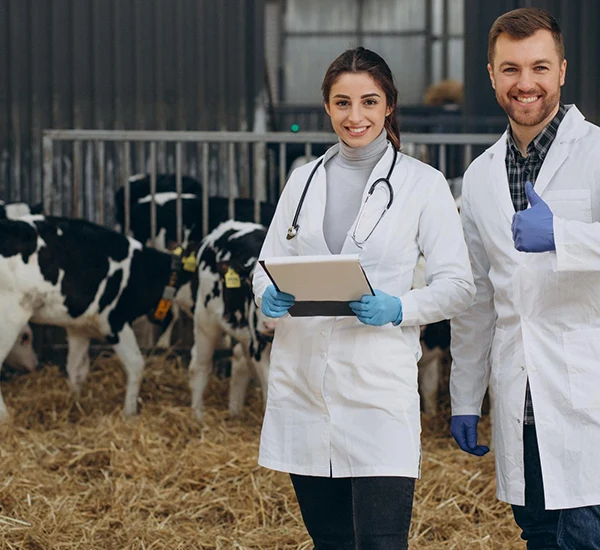
Disease remains the most significant threat to livestock stability. Our approach moves beyond treatment toward Total Biosecurity.
Vector Control: In tropical climates, ticks and mosquitoes are primary disease carriers. We maintain strict environmental hygiene and regular insecticide treatments to prevent vector-borne illnesses.
Quarantine & Surveillance: All new arrivals (such as our Australian or Thai imports) undergo a mandatory quarantine period. Daily health visual checks by our herders ensure any "off-feed" behavior is flagged immediately for veterinary inspection.
Strategic Vaccination: We follow a rigorous immunization schedule for transboundary diseases like Foot-and-Mouth Disease (FMD), protecting both our herd and the national supply chain.
High Cattle Feed Costs
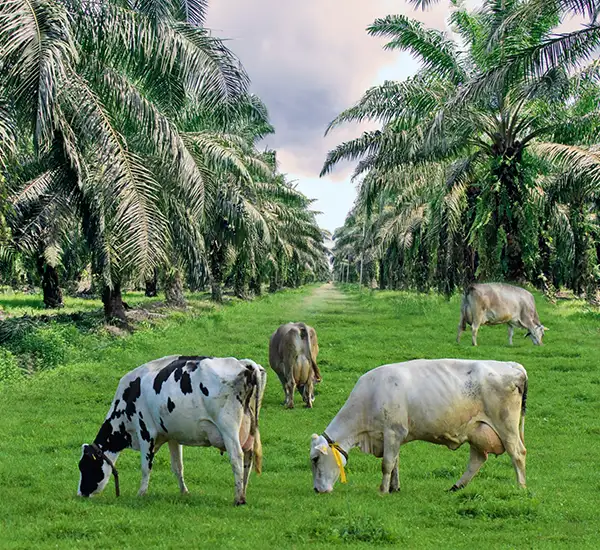
Feed typically accounts for 60–70% of total production costs. To keep our beef affordable and high-quality, we utilize a circular economy model.
Agro-Integration: By grazing in oil palm plantations, we dramatically reduce the "cost-per-kg" of weight gain. The cattle forage on natural vegetation that would otherwise require chemical clearing.
By-Product Valorization: We lower feed costs by incorporating nutrient-dense agricultural by-products, such as palm kernel cake or corn factory waste, into our nighttime Total Mixed Ration (TMR).
Precision Feeding: We analyze our forage to ensure we aren't "over-supplementing," which prevents waste and ensures every ringgit spent on feed translates into growth.

Market Fluctuations
Market volatility can be unpredictable, but our business model is built for stability.
Multi-Stream Revenue: We do not rely solely on beef. By producing fresh milk as a high-demand byproduct, we maintain a steady daily cash flow that offsets the longer cycles of meat production.
Inventory Diversity: Our inventory includes various breeds (Australian, Thai, and Local) at different weight points. This allows us to pivot our supply based on current market demands, whether for premium hypermarkets or local vendors.
National SSR Alignment: By focusing on the Malaysian government's goal to increase the Self-Sufficiency Ratio (SSR) for meat, we position ourselves in a high-growth sector that is less susceptible to the price spikes seen in the import-dependent market.